The Diligent Needle: Instrument of Profit, Pleasure and Ornament
Linda Eaton, Winterthur Museum
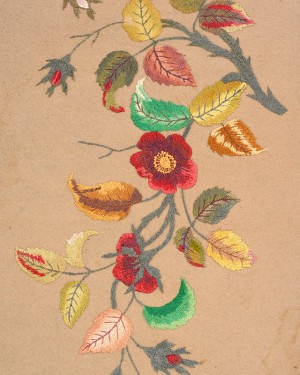
Fine needlework skills were revived in America after the exhibition of work by London’s Royal School of Needlework at the 1876 Exposition. Known as “art needlework,” this tablecloth was embroidered in Pennsylvania between 1890 and 1910.
For centuries, instruction in needlework was an important part of a young woman’s education. Both plain sewing and fancy embroidery require considerable time and effort to learn. As a result, women took great pride in their work. Samplers and silkwork pictures functioned much like diplomas as a sign of a woman’s education and accomplishment.
Some women used their skill with a needle to generate extra income or to support themselves and their families. More genteel women might teach the skill, while less affluent women took in plain sewing — mending, hemming bed and table linens, or making shirts and shifts for their more prosperous neighbors.
Many women took great pleasure in using their needle to create objects that might commemorate a special event, gifts to friends and family, or display the artistic taste of their makers. They might use their needles to embellish clothing, accessories and furnishings. Although these needlework projects were decorative in nature, they were usually called “work” in letters and diaries. While mundane plain sewing might be done at home among the family, more ornamental work was often accomplished in the company of friends. Linda Eaton will examine the diligence of these needlewomen over four centuries.